
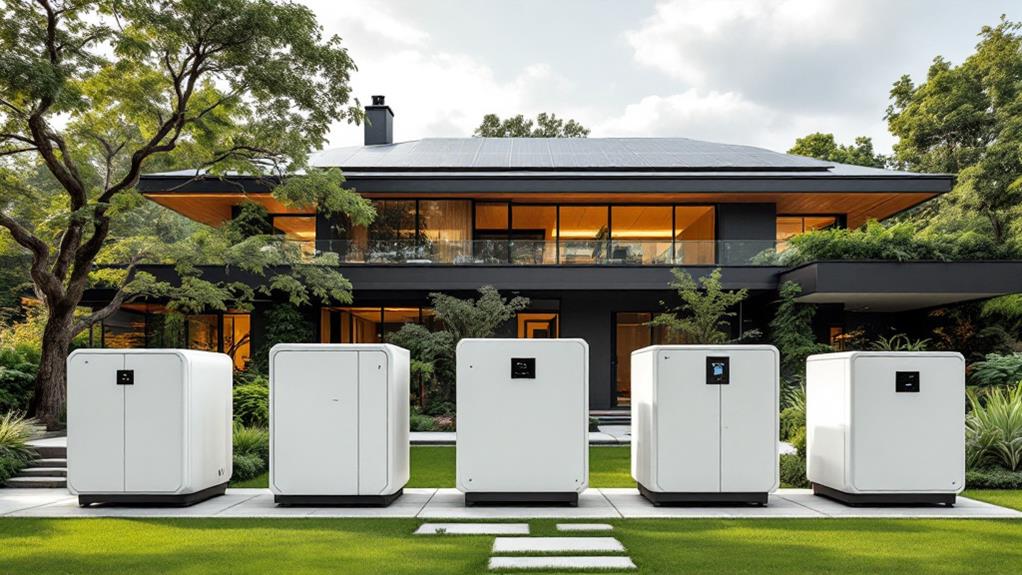
Are you tired of unpredictable energy bills and concerned about power outages leaving your family in the dark? Imagine a future where you have more control over your energy consumption, reduce your carbon footprint, and ensure a reliable power supply, all while increasing your home's value.
Multi-unit home battery systems are revolutionizing the way homeowners approach energy management. They provide a way to store excess solar energy, use power during peak demand to avoid high utility rates, and offer backup power during outages. However, implementing these systems requires careful consideration to ensure optimal performance, safety, and cost-effectiveness. This guide will walk you through the top five considerations to help you make informed decisions about multi-unit home battery storage.
A simple first step towards understanding your energy needs is to review your past energy bills. Analyze your usage patterns to identify peak consumption times and overall energy demands. This will help you determine the appropriate battery capacity for your home.
Top 5 Considerations for Multi-Unit Home Battery Systems
Embarking on a home battery storage project involves several key elements that require careful planning and research. Let's explore the most important factors to consider before you invest.
1. Determining Your Energy Needs and Usage Patterns
Before you even start looking at different battery models, understanding your energy needs is crucial. How much energy do you typically use in a day? What appliances are essential during a power outage? These are questions you need to answer to choose the right system size.
It's not just about total energy consumption but also when you use it. For example, if you use most of your energy in the evenings when solar panels aren't generating power, a larger battery capacity might be necessary. Similarly, consider seasonal variations in your energy usage. You might use more energy for air conditioning in the summer or heating in the winter.
Practical Tip: Conduct a Home Energy Audit
A comprehensive home energy audit can provide valuable insights into your energy usage patterns. You can hire a professional energy auditor or conduct a DIY audit.
Here’s how to do a DIY energy audit
Step 1: Gather your energy bills for the past 12 months. Step 2: Identify appliances and devices that consume the most energy. Consider using a power meter to measure the energy consumption of individual appliances. Step 3: Assess your home's insulation and sealing. Check for drafts around windows and doors. Step 4: Analyze your lighting. Replace incandescent bulbs with energy-efficient LEDs.
This analysis will give you a clearer picture of your energy needs, allowing you to select a battery system that meets your specific requirements. Understanding your current consumption is the first step to optimizing yourhome energy efficiency withrenewable energy at home.
2. Battery Capacity and System Sizing
Once you understand your energy needs, you can determine the appropriate battery capacity for your system. This is arguably the most important decision, as it directly affects the system's ability to meet your energy demands during outages and peak usage times.
Battery capacity is measured in kilowatt-hours (k Wh). A larger capacity means the battery can store more energy. However, larger batteries are also more expensive. The goal is to strike a balance between having enough capacity and staying within your budget.
Consider the following factors when determining battery capacity:Backup Power Requirements: What essential appliances do you want to power during an outage (e.g., refrigerator, lights, medical equipment)? Solar Production: How much energy do your solar panels generate on average? Self-Consumption Goals:Do you want to maximize self-consumption of solar energy to reduce your reliance on the grid?
Example: System Sizing Scenario
Let's say you want to power your refrigerator (1 k Wh/day), lights (0.5 k Wh/day), and a medical device (0.5 k Wh/day) during an outage. That's a total of 2 k Wh/day. If you want the battery to last for 24 hours without any solar input, you'll need a battery with at least 2 k Wh of usable capacity. However, it's always a good idea to have some buffer, so a 3-4 k Wh battery might be a better choice.
Consider exploring options like a Tesla Powerwall or Enphase Encharge, both popular choices forhome battery storage.
3. Battery Chemistry and Technology
Different battery chemistries offer varying levels of performance, safety, and longevity. The most common types of batteries used in home energy storage systems are lithium-ion and lead-acid.
Lithium-ion batteries are known for their high energy density, long lifespan, and relatively low maintenance requirements. They are more expensive than lead-acid batteries but offer better overall performance. Lead-acid batteries are a more affordable option but have a shorter lifespan, lower energy density, and require more maintenance. They are also heavier and bulkier than lithium-ion batteries.
There are different types of lithium-ion batteries, including: Lithium Iron Phosphate (LFP): Known for their safety and long lifespan. Nickel Manganese Cobalt (NMC): Offer high energy density but may have a shorter lifespan than LFP batteries.
When choosing a battery chemistry, consider the following factors: Lifespan: How long do you expect the battery to last? Safety: Are there any safety concerns associated with the battery chemistry? Maintenance: How much maintenance is required? Cost: What is the upfront cost and the long-term cost of ownership?
FAQ: What About Solid-State Batteries?
Solid-state batteries are an emerging technology that promises higher energy density, improved safety, and longer lifespan compared to traditional lithium-ion batteries. While solid-state batteries are not yet widely available for home energy storage, they are expected to become more prevalent in the future. Keep an eye on advancements in battery technology as they could significantly impact your futurehome energy efficiency.
4. Installation and Grid Interconnection
Installing a multi-unit home battery system is not a DIY project. It requires specialized knowledge and expertise to ensure safe and reliable operation. It’s crucial to hire a qualified and experienced installer who is familiar with local building codes and regulations.
The installation process typically involves:Permitting: Obtaining the necessary permits from your local authorities. Electrical Work: Connecting the battery system to your home's electrical panel. Grid Interconnection: Coordinating with your utility company to connect the battery system to the grid. Commissioning: Testing and configuring the battery system to ensure it is operating correctly.
Grid interconnection is a critical aspect of the installation process. It allows you to send excess solar energy back to the grid and receive credit on your electricity bill (net metering). It also enables the battery system to draw power from the grid during times of low solar production or high energy demand.
Practical Tip: Check Installer Certifications
Before hiring an installer, check their certifications and licenses. Look for installers who are certified by organizations like the North American Board of Certified Energy Practitioners (NABCEP). This certification ensures that the installer has the necessary training and experience to install battery systems safely and effectively. Also, get multiple quotes to ensure competitive pricing.
5. Cost, Incentives, and Return on Investment (ROI)
The cost of a multi-unit home battery system can vary depending on the battery capacity, chemistry, and installation complexity. However, there are several incentives and rebates available that can help offset the cost.
Federal Tax Credit: The federal government offers a tax credit for qualified residential clean energy systems, including battery storage. State and Local Incentives: Many states and local governments offer additional incentives and rebates for battery storage systems. Utility Rebates:Some utility companies offer rebates for customers who install battery systems.
To calculate the return on investment (ROI) of a battery system, consider the following factors: Energy Savings: How much money will you save on your electricity bill by using the battery system to reduce your reliance on the grid? Backup Power: How much value do you place on having backup power during outages? Incentives and Rebates: How much money will you receive in incentives and rebates? Battery Lifespan: How long will the battery system last? Maintenance Costs:How much will it cost to maintain the battery system over its lifespan?
FAQ: How Long Does a Home Battery Last?
The lifespan of ahome battery depends on several factors, including the battery chemistry, usage patterns, and maintenance practices. Lithium-ion batteries typically last for 10-15 years, while lead-acid batteries last for 3-5 years. Properbattery life and maintenance are essential to maximize the lifespan of your system.
By carefully considering these five factors, you can make an informed decision about investing in a multi-unit home battery system. This investment can lead to significantenergy savings, increased home energy efficiency, and greater control over yoursmart home energy*consumption, all while contributing to a more sustainable future.
Investing in a home battery system is a big decision, but with careful planning and the right information, you can confidently move towards a more resilient and energy-independent future. Take the time to assess your needs, research your options, and work with qualified professionals to ensure a successful installation. The benefits of enhanced energy control, cost savings, and reliablebackup power systems are well within your reach.